Essay 02 · History · Philosophy · Religious authority
Religion, Science and the Freedom to Question
From the Council of Nicaea to Spinoza, Bruno and Galileo: on religious authority, scientific inquiry and the right to think freely.
The Council of Nicaea
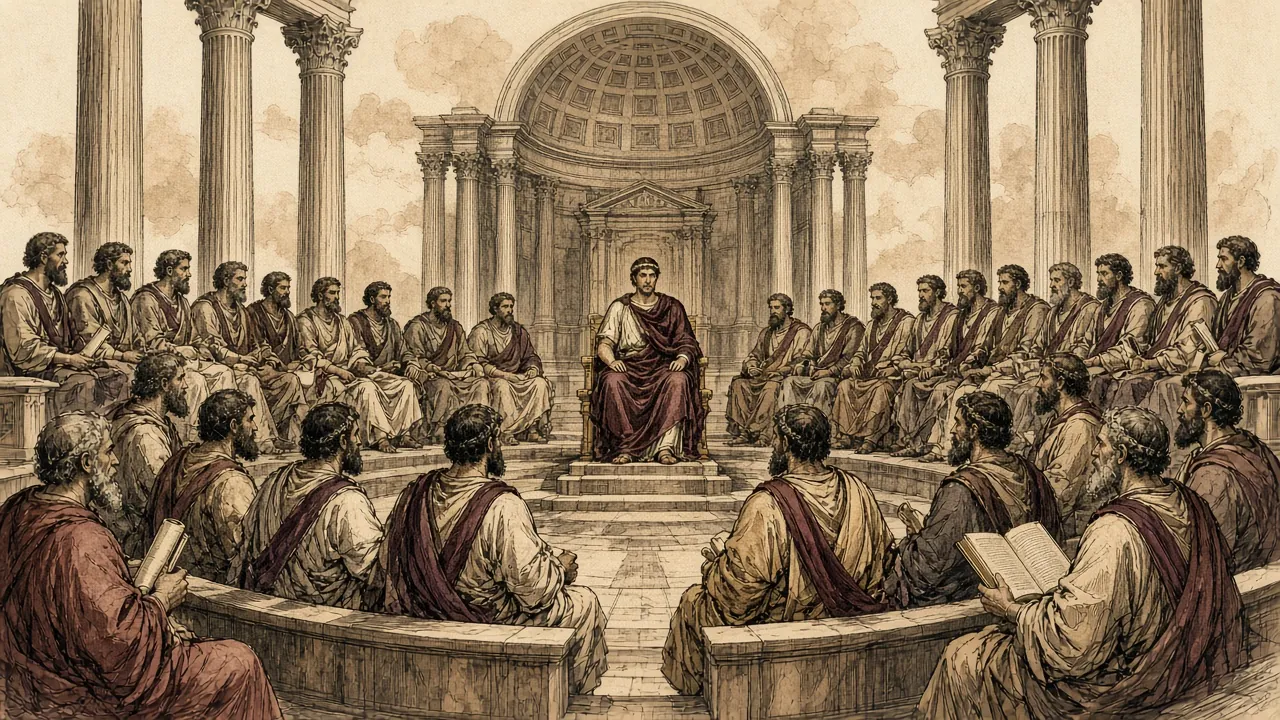
The First Council of Nicaea was a historic gathering of Christian bishops convened in 325 AD in Nicaea, modern-day İznik, Turkey, by the Roman Emperor Constantine the Great.1
Its main achievements were addressing the Arian controversy over the divinity of Jesus, creating the original Nicene Creed and establishing rules for the date of Easter.
For approximately 300 years before this time, Christianity operated as a patchwork of communities rather than as a single unified institution, with considerable diversity in theological beliefs.
The biblical canon had not yet been universally standardized.2
The objective of the Council of Nicaea, called by Emperor Constantine, was to bring unity and uniformity among Christians.
Baruch Spinoza
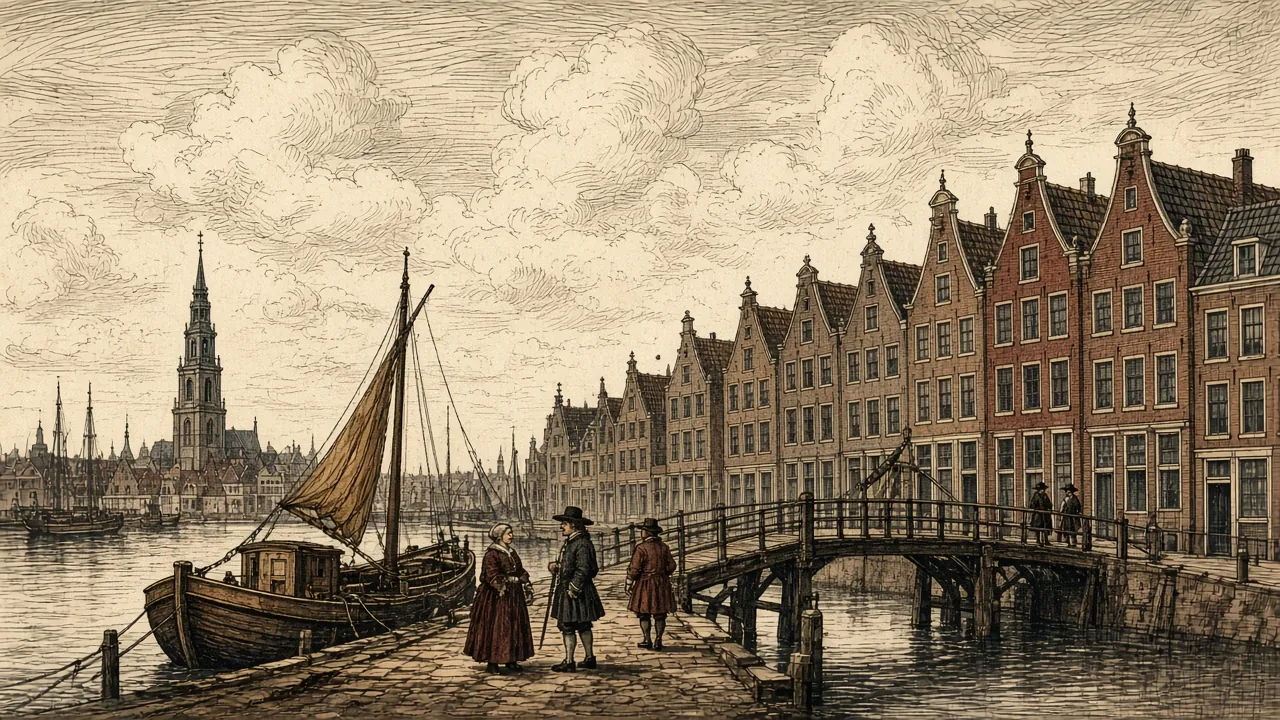
With this backdrop, let us fast-forward to the seventeenth century in Amsterdam, in the Dutch Republic, where a Jewish community descended from people who fled persecution in the Iberian Peninsula established its own religious institutions.3
Baruch Spinoza was born on November 24, 1632, in Amsterdam to Jewish parents.
Spinoza received an education within the Jewish community and became deeply familiar with religious texts and traditions.

He began studying scripture critically, not simply accepting it as a divine message but examining it as a written text.
He noticed inconsistencies in descriptions of events and differences in writing styles.
His questioning increasingly challenged established religious authority.
At the age of 23, Spinoza was excommunicated by his Jewish community. The prohibition instructed community members not to associate with him or come within a specified distance of him.4
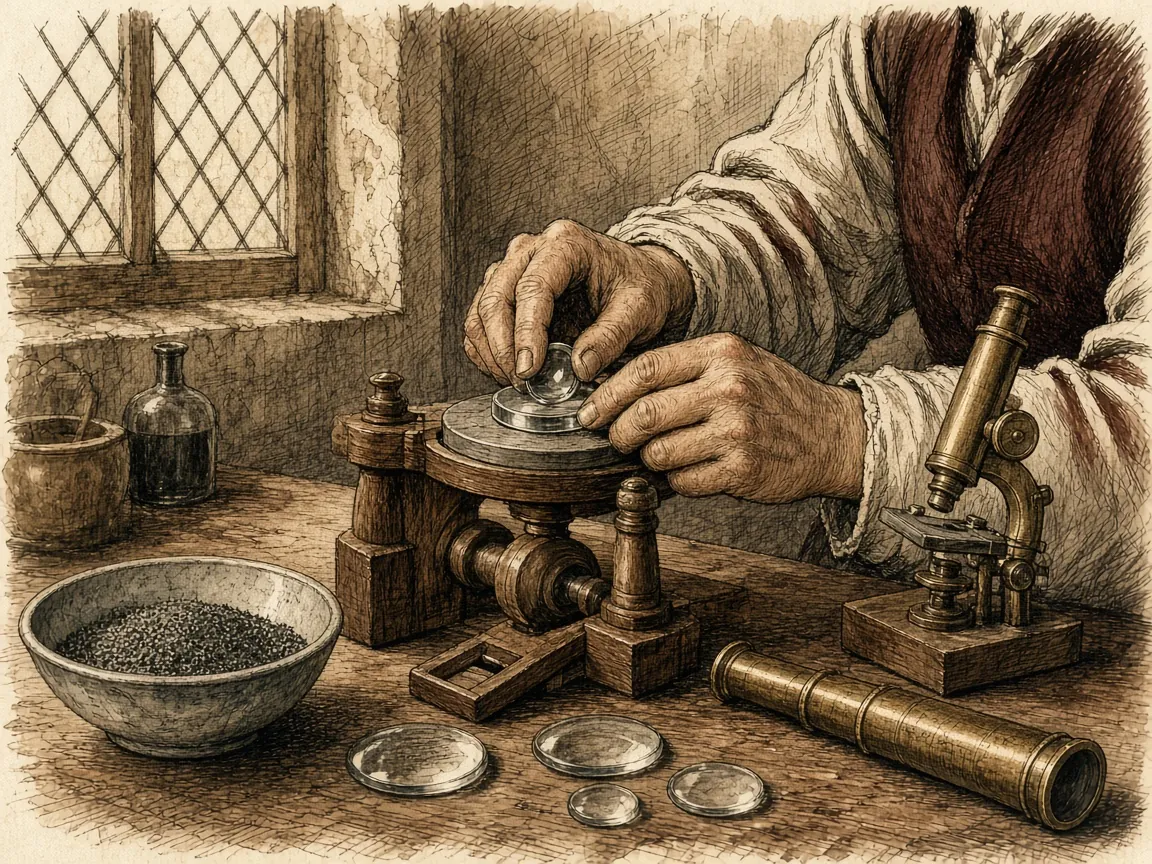
Spinoza worked as an optical lens grinder and eventually lived in The Hague.
He continued studying and writing. His famous philosophical work, Ethics, was published after his death.5
Spinoza was not just a philosopher but an obsessive investigator.
He asked: What does scripture teach you?
According to Spinoza, scripture does not primarily teach philosophy, metaphysics or scientific truth. Its purpose is to teach obedience, piety, justice and charity.6
Spinoza defended freedom of thought as a natural right.
No church, state or council should have unlimited authority to determine what people are permitted to think.7
Such declarations can become instruments of control rather than spirituality.
Questioning the nature of God
Consider the following philosophical questions associated with Spinoza’s thinking:8
If God is infinite, how can He be separate from His creation?
If God is perfect, why would He need worship?
If God is loving, why did He create hell?
If God knows everything, why does He get angry when things happen exactly as He already knew they would?
If God is truly infinite, omnipresent and eternal, then He cannot simply exist somewhere. He must be everywhere.
If God is truly perfect, then He cannot desire anything, because desire implies a lack, and perfection cannot have a lack.
If God is truly eternal, He cannot change His mind, because change implies time.
So who is the God who gets angry, regrets, makes deals, punishes and rewards?
Such descriptions resemble the behavior of a human king.
Spinoza challenged anthropomorphic descriptions of God and questioned the political authority exercised through religious institutions.
His philosophy offered a radically different understanding of God and nature.
The historical price of questioning authority
Spinoza faced exclusion for challenging the established status quo.
Other philosophers and scientists also experienced persecution.
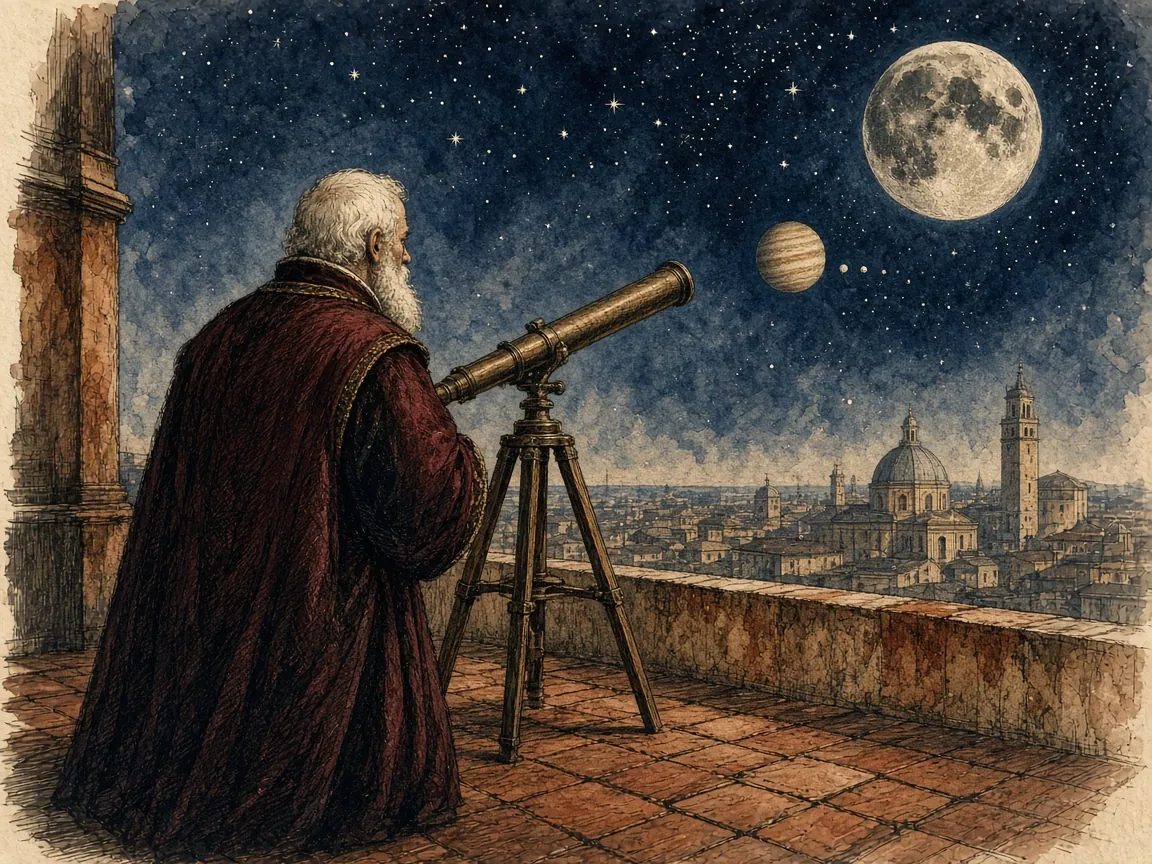
Giordano Bruno, an Italian philosopher, was executed in 1600 following a trial involving theological and cosmological beliefs.9
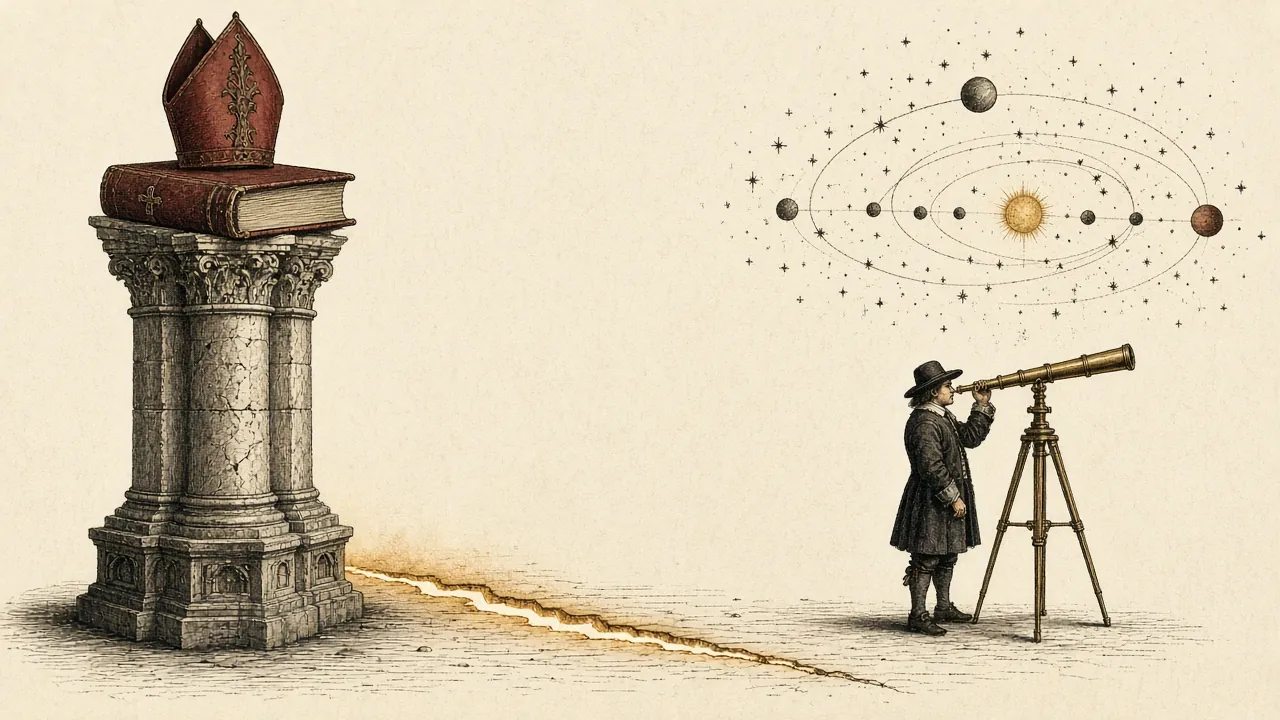
Galileo Galilei defended the heliocentric understanding of the solar system and spent his final years under house arrest before dying in 1642.10
Those who do not learn from history are condemned to repeat it.11
- 1543Inquiry: Copernicus publishes On the Revolutions A Sun-centered model of the heavens.
- 1610Inquiry: Galileo's Starry Messenger Telescopic observations of the Moon and Jupiter's moons.
- 1632Inquiry: Spinoza born in Amsterdam; Galileo's Dialogue published
- 1670Inquiry: Spinoza's Theological-Political Treatise Published anonymously; it argues for freedom of thought.
- 1677Inquiry: Spinoza dies; Ethics published In his posthumous works.
- 1859Inquiry: Darwin's On the Origin of Species Evolution by natural selection.
Overview of the conflict between religion and science
The conflict between religious beliefs and science arises partly because religion often relies on enduring spiritual truths, while science relies on ideas that can change with new evidence.
Religious beliefs are based on sacred texts, traditions, faith and spiritual experiences.
They seek answers concerning morality, purpose and the divine.
Scientific arguments are based on observation, experimentation and mathematical reasoning.
Science seeks physical causes and explanations of how the natural world works. Its theories are updated, improved or replaced when researchers discover better evidence.
| Aspect | Religious approaches | Scientific approaches |
|---|---|---|
| Grounded in | Sacred texts, tradition, faith and spiritual experience | Observation, experiment and mathematical reasoning |
| Asks about | Morality, purpose and the divine | Physical causes: how the natural world works |
| When ideas change | Seeks enduring truths; change is often slow and contested | Theories are revised or replaced when better evidence appears |
| How claims are tested | Interpretation within a community and tradition | Evidence that others can check and reproduce |
| What it offers | Wisdom, values, peace and continuity | Knowledge, prediction and power over nature |
Why they clash
Science and religion sometimes employ different standards for determining truth.
Scientific discoveries can contradict literal historical or physical claims found in ancient religious texts.
As science explains more of the universe, it challenges supernatural explanations previously used to understand everyday events.
Historically, society’s beliefs and outcomes have been influenced by both religion and science.
Science seeks to understand the structural behavior of the physical and natural world through observation and systematic study.
Many religious traditions believe that the physical and natural world is governed by a divine power, and that worship or prayer may influence human circumstances.
A common example of apparent conflict can be seen in the biblical statement:
“In the beginning God created the heavens and the earth.”12
Scientists, meanwhile, use observations and reasoning to explain cosmic development through the Big Bang theory and biological development through the theory of evolution.
An alternative way of thinking
Religion and science may have respective worlds defined differently, with dissimilar methods.
Science investigates; religion interprets.
Science gives humanity knowledge, which is power; religion offers wisdom, which can guide that power.
Science deals mainly with facts; religion deals mainly with values.13
There are differences of opinion among religious people, just as scientists also differ among themselves.
Scientific disagreements have occurred over climate change, biological evolution and many other subjects.
However, the existence of disagreement does not necessarily mean that all competing positions have equal evidentiary support.14
Questions about life after death or the existence of God continue to generate discussion.
Both religion and science have value for human beings.
Religion can bring peace and continuity to its followers, whereas science often progresses by questioning established explanations.
Religion can prescribe a way of thinking for its followers, while science encourages questioning existing ideas.
Historical and cosmological conflicts
The Galileo Affair of 1633 involved the Roman Catholic Church forcing Galileo to recant his support for heliocentrism because it appeared to contradict certain interpretations of biblical passages.
Copernicus’s heliocentric model challenged traditional interpretations of Earth’s position in the universe.15
Giordano Bruno’s execution is frequently cited in the history of religious and scientific conflict, although his trial involved theological heresies rather than purely scientific propositions.
Charles Darwin’s publication of On the Origin of Species in 1859 disrupted traditional literal accounts of divine creation, leading to friction between evolutionary biology and some religious groups.16
Modern radiometric dating places Earth’s age at approximately 4.5 billion years, whereas some literalist religious interpretations propose a timeline of only several thousand years.17
Modern bioethical disagreements
Scientific understandings of human development, embryonic stem cell research and brain death can clash with religious doctrines concerning ensoulment and the sanctity of life.
There are also disagreements concerning medical interventions, including vaccinations, blood transfusions and reproductive technologies.
Conclusion
There is no universal agreement about whether science and religion are contradictory or complementary.
- ConflictScience and religion make rival claims about the same questions, and one must win.
- IndependenceThey answer different questions, facts and values, and need not collide.
- DialogueThey remain distinct but can learn from one another at their boundaries.
- IntegrationThey can be combined into a single, unified understanding.
It is also difficult to establish whether one is more beneficial than the other.
Religion can offer peace and continuity, while science can introduce disruption by challenging existing beliefs.
The relationship between science and religion remains an ongoing debate, and its future is difficult to predict.
Notes and sources
Notes marked Editorial note, Context or Verified were added by the editors to correct, clarify or confirm a point. They are not the author’s words.
- Ancient sources give different numbers of participants, from about 250 to the traditional figure of 318 bishops, mostly from the eastern half of the empire. Encyclopaedia Britannica, “First Council of Nicaea” ↩
- Editorial note a popular modern belief holds that the Council of Nicaea chose which books belong in the Bible. It did not; the canons of the council do not deal with scripture, and the Christian canon took shape gradually over the following centuries, with lists such as Athanasius’s in 367 AD. The author does not make this claim, but the juxtaposition is often misread. Encyclopaedia Britannica, “Biblical literature: The canon” ↩
- The community was largely Portuguese and Spanish (Sephardic) Jews and their descendants, many of whose families had been forced to convert in Iberia and had fled the Inquisition. Stanford Encyclopedia of Philosophy, “Baruch Spinoza” ↩
- Editorial note the herem (ban) was pronounced on July 27, 1656, when Spinoza was 23. Its text condemns his “abominable heresies” and “monstrous deeds” without specifying them, and orders that no one should communicate with him, read his writings, or come within four cubits of him. Exactly which opinions led to the ban is not documented; his critical analysis of scripture was published later, in the Theological-Political Treatise (1670). SEP, “Baruch Spinoza” ↩
- Spinoza lived in Rijnsburg and Voorburg before settling in The Hague around 1670. He died there on February 21, 1677; the Ethics appeared that year in his Opera Posthuma. His Theological-Political Treatise was published anonymously in 1670 and banned in 1674. SEP, “Baruch Spinoza” ↩
- Spinoza argues this in chapters 13 and 14 of the Theological-Political Treatise. SEP, “Spinoza’s Political Philosophy” ↩
- Chapter 20 of the Theological-Political Treatise argues that in a free state everyone may think what they like and say what they think. SEP, “Spinoza’s Political Philosophy” ↩
- Editorial note these questions are a modern paraphrase in the spirit of Spinoza, of the kind widely shared today; they are not quotations from his writings. Several echo his actual arguments: that God is not separate from nature (Ethics, Part I), that God has no passions such as anger or desire (Ethics, Part V, Proposition 17), and that picturing God as a human ruler is a projection (Ethics, Part I, Appendix). Spinoza did not write about hell in these terms. Spinoza, Ethics, trans. R. H. M. Elwes (Project Gutenberg) ↩
- Bruno was burned at the stake in Rome’s Campo de’ Fiori on February 17, 1600. The full trial records have not survived, and historians debate exactly which of his ideas were judged heretical. Encyclopaedia Britannica, “Giordano Bruno” ↩
- Galileo was found “vehemently suspected of heresy” in 1633 and confined to his villa at Arcetri near Florence, where he died on January 8, 1642. In 1992 Pope John Paul II formally acknowledged that the Church’s judges had erred. SEP, “Galileo Galilei” ↩
- The saying is usually traced to the philosopher George Santayana: “Those who cannot remember the past are condemned to repeat it.” (The Life of Reason, vol. 1, 1905). SEP, “George Santayana” ↩
- Genesis 1:1, in the wording of modern translations such as the English Standard Version; the King James Version reads “the heaven and the earth.” Genesis 1:1, Bible Gateway (parallel translations) ↩
- Editorial note these lines closely echo Martin Luther King Jr.’s sermon “A Tough Mind and a Tender Heart” (Strength to Love, 1963): “Their respective worlds are different and their methods are dissimilar. Science investigates; religion interprets. Science gives man knowledge which is power; religion gives man wisdom which is control. Science deals mainly with facts; religion deals mainly with values. The two are not rivals. They are complementary.” Martin Luther King, Jr. Research and Education Institute, Stanford ↩
- Context among scientists in the relevant fields there is overwhelming agreement that evolution occurred and that recent global warming is mainly caused by human activity; the remaining disagreements concern details. Much of the wider dispute has been public and political rather than scientific. NASA, “Scientific Consensus”; National Academy of Sciences, Science, Evolution, and Creationism ↩
- Nicolaus Copernicus published On the Revolutions of the Heavenly Spheres in 1543. In 1616 the Church suspended the book “until corrected.” SEP, “Nicolaus Copernicus” ↩
- Darwin Online, On the Origin of Species (1859) ↩
- The best current figure is 4.54 ± 0.05 billion years. USGS, Age of the Earth ↩